
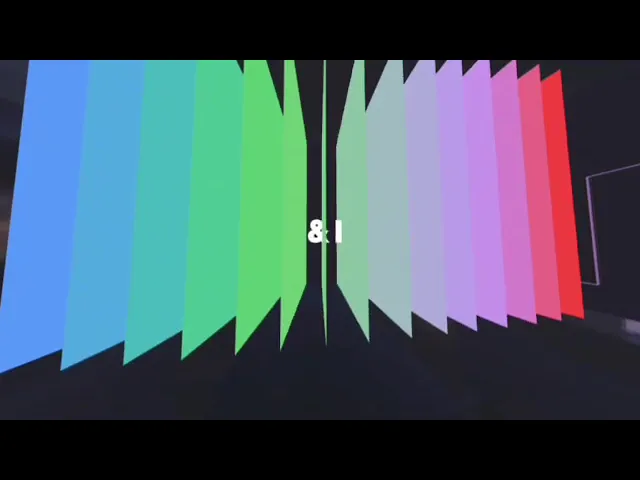
Vibra Vision
Industry
Industry
Industry
Industry
Education through VR
smart pillbox with companion application
Education through VR
Education through VR
Deliverable
Deliverable
Deliverable
Deliverable
Virtual space Design
smart pillbox with companion application
Virtual space Design
Virtual space Design
Team
Team
Team
Team
Individual work
Group project of 3 UX Designers, 1 Graphic Designer
Individual work
Individual work
Timeline
Timeline
Timeline
Timeline
Jan 2024 - Feb 2024
Oct 23 - Nov 23
Jan 2024 - Feb 2024
Jan 2024 - Feb 2024
Project Overview
This is an immersive exhibition in the metaverse, tracing the evolution of visual music. It promotes visual music as a new way to experience music by providing an interactive and educational engaging space. This exhibition is inspired by deaf and hard of hearing individuals who may not be able to use virtual spaces that has sound as the main feature!
My Role
Carrying out secondary research through literature review.
Conducting contextual inquiry through observations at Walmart.
Participating in Ideation and Data analysis
Visualizing the play-kit.
Conducting In-site User Testing
Project Overview
This is an immersive exhibition in the metaverse, tracing the evolution of visual music. It promotes visual music as a new way to experience music by providing an interactive and educational engaging space. This exhibition is inspired by deaf and hard of hearing individuals who may not be able to use virtual spaces that has sound as the main feature!
My Role
Carrying out secondary research through literature review.
Conducting contextual inquiry through observations at Walmart.
Participating in Ideation and Data analysis
Visualizing the play-kit.
Conducting In-site User Testing
Project Overview
This is an immersive exhibition in the metaverse, tracing the evolution of visual music. It promotes visual music as a new way to experience music by providing an interactive and educational engaging space. This exhibition is inspired by deaf and hard-of-hearing individuals who may not be able to use virtual spaces that have sound as the main feature!
My Role
Carrying out secondary research through a literature review.
Conducting contextual inquiry through observations at Walmart.
Participating in Ideation and Data Analysis
Visualizing the play-kit.
Conducting In-Site User Testing
Project Overview
This is an immersive exhibition in the metaverse, tracing the evolution of visual music. It promotes visual music as a new way to experience music by providing an interactive and educational engaging space. This exhibition is inspired by deaf and hard of hearing individuals who may not be able to use virtual spaces that has sound as the main feature!
My Role
Carrying out secondary research through literature review.
Conducting contextual inquiry through observations at Walmart.
Participating in Ideation and Data analysis
Visualizing the play-kit.
Conducting In-site User Testing




Design Process
Design Process
01
01
01
Background and Content Research
Background and Content Research
Background and Content Research


02
02
02
Ideation and concept development
Ideation and concept development
Ideation and concept development
03
03
03
Design Implementation
Design Implementation
Design Implementat-ion


04
04
04
User Testing and design evaluation
User Testing and design evaluation
User Testing and design evaluation
Background
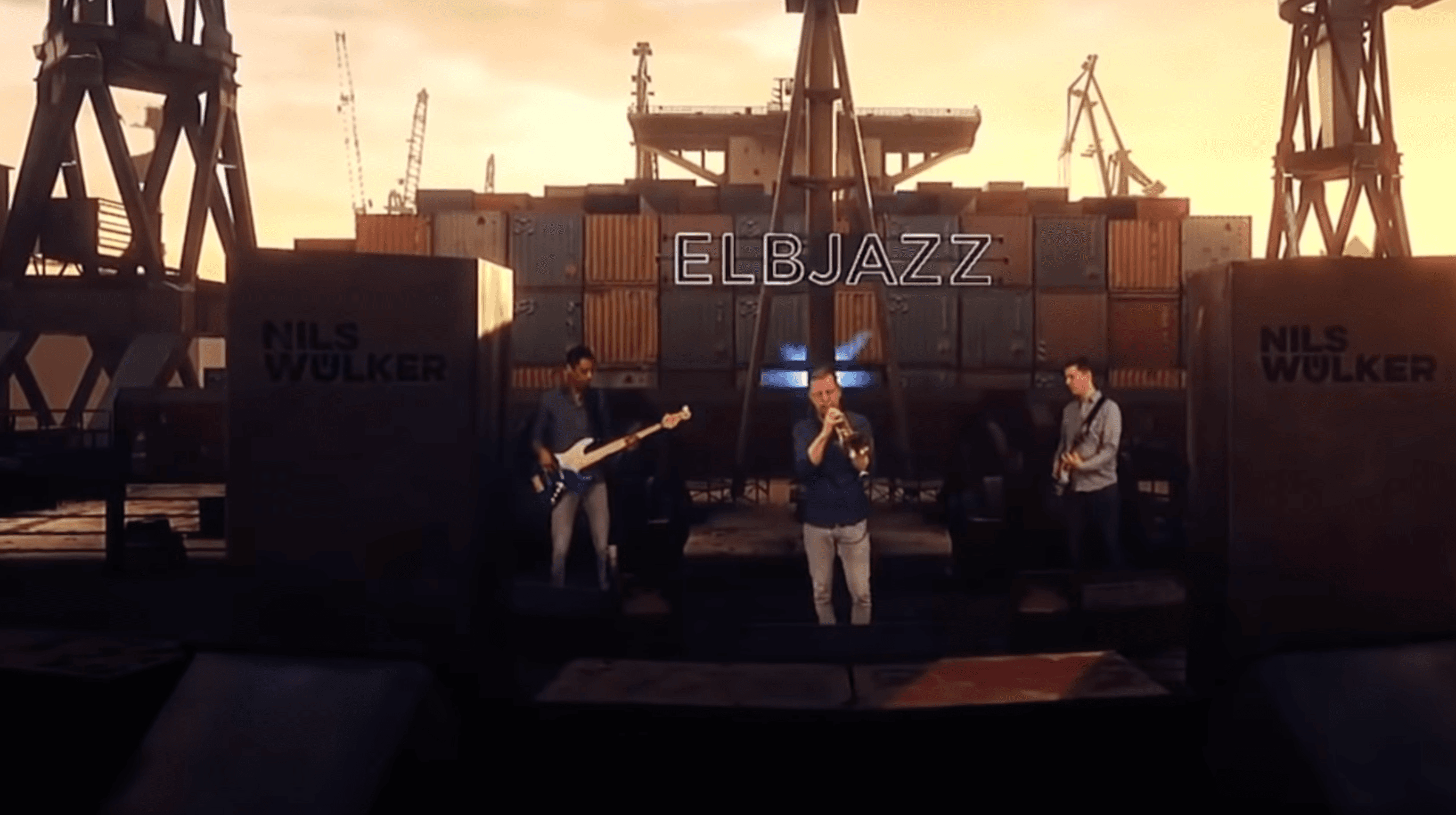
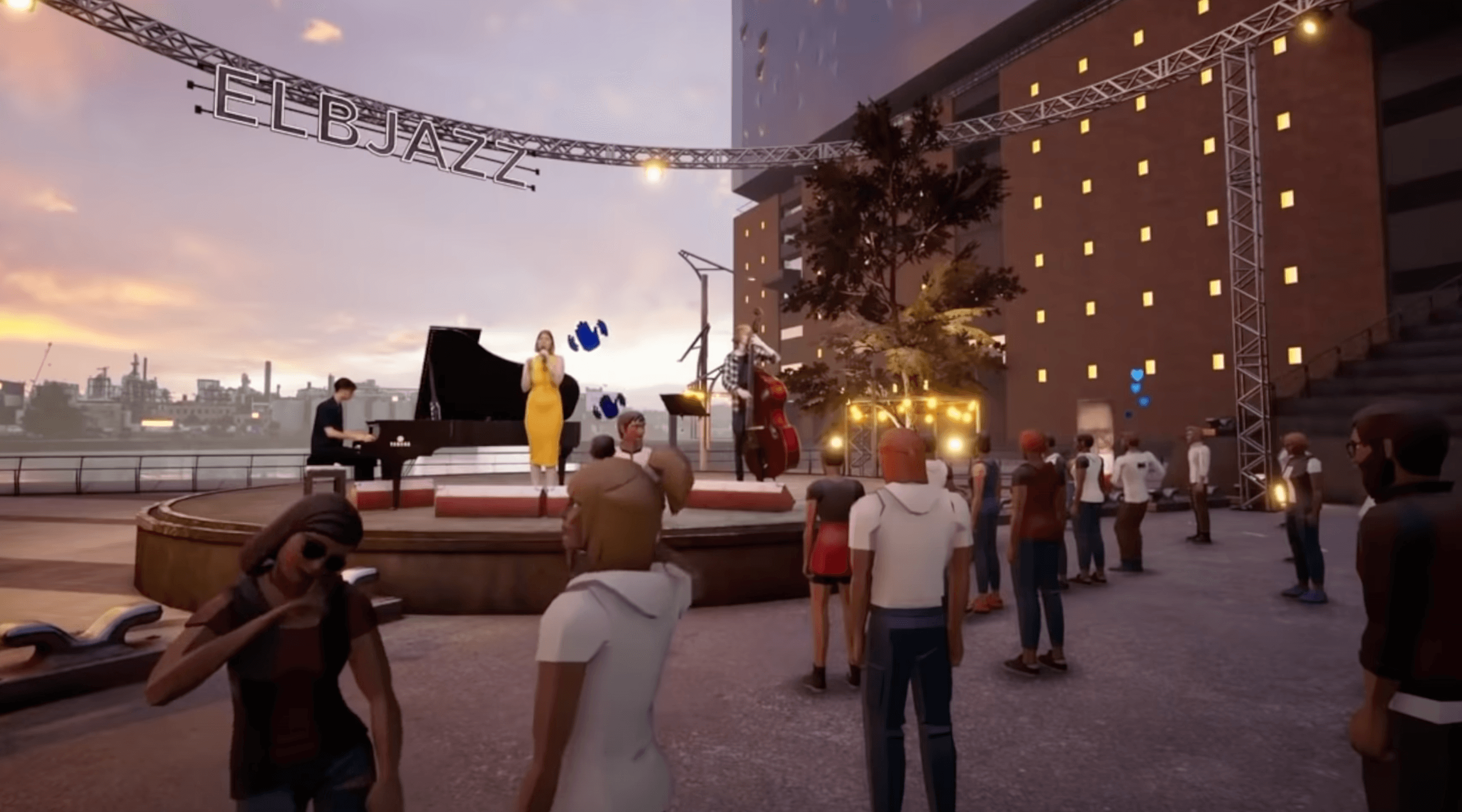
The future of virtual reality (VR) holds immense promise and potential for transformative experiences across various domains. One of the evolving fields in virtual reality is music. VR will enable artists to create immersive concert experiences that allow fans to virtually attend live performances from anywhere in the world. These virtual concerts can feature interactive elements, personalized views, and spatial audio, providing a sense of presence and connection for audiences. But what happens to hearing-impaired people when entering rooms with sound as their main feature?
The future of virtual reality (VR) holds immense promise and potential for transformative experiences across various domains. One of the evolving fields in virtual reality is music. VR will enable artists to create immersive concert experiences that allow fans to virtually attend live performances from anywhere in the world. These virtual concerts can feature interactive elements, personalized views, and spatial audio, providing a sense of presence and connection for audiences. But what happens to hearing-impaired people when entering rooms with sound as their main feature?
Problem overview
As VR concerts and music-driven spaces expand, most experiences still rely primarily on sound.
This sound-first design can limit access and participation for deaf and hard-of-hearing audiences.
The result is an accessibility gap, and a clear opportunity to use visual music to translate sound into meaningful visual experiences.
As VR concerts and music-driven spaces expand, most experiences still rely primarily on sound.
This sound-first design can limit access and participation for deaf and hard-of-hearing audiences.
The result is an accessibility gap and a clear opportunity to use visual music to translate sound into meaningful visual experiences.


Purpose
The proposed solution is to translate sound into meaningful visual systems, so music-driven VR spaces can remain immersive and accessible for deaf and hard-of-hearing audiences.
The proposed solution is to translate sound into meaningful visual systems, so music-driven VR spaces can remain immersive and accessible for deaf and hard-of-hearing audiences.
What is vibra vision?
Vibra Vision is an immersive metaverse exhibition that traces the evolution of visual music while showcasing interactive installations that convert sound into visuals. It invites audiences to listen with their eyes and offers VR creators a model for integrating visual accessibility as a core layer of musical experience.
Vibra Vision is an immersive metaverse exhibition that traces the evolution of visual music while showcasing interactive installations that convert sound into visuals. It invites audiences to listen with their eyes and offers VR creators a model for integrating visual accessibility as a core layer of musical experience.
Why an Exhibition?
An exhibition format makes this approach understandable through direct experience. It allows visitors to explore multiple visual translation methods, compare historical approaches, and interact with sound-to-visual relationships in a way that is educational, intuitive, and inclusive.
An exhibition format makes this approach understandable through direct experience. It allows visitors to explore multiple visual translation methods, compare historical approaches, and interact with sound-to-visual relationships in a way that is educational, intuitive, and inclusive.
01
Findings from Secondary research
Western families often have a negotiation-based structure, giving children more independence and autonomy.
Grocery shopping is used as a learning opportunity, teaching children to select produce using senses and to develop analytical skills like price and health assessment.
Shopping trips serve as chances for younger children to expand their vocabulary and knowledge.
Parents tend to spend more when shopping with their children.
Children use their "purchase-power" directly or indirectly in shopping decisions.
Children, particularly aged 4-11, significantly influence family shopping decisions.
Technological interventions may not suit very young children due to different cognitive and emotional development stages.
Interventions should be straightforward and based on tangible concepts.
01
Findings from Secondary research
Western families often have a negotiation-based structure, giving children more independence and autonomy.
Grocery shopping is used as a learning opportunity, teaching children to select produce using senses and to develop analytical skills like price and health assessment.
Shopping trips serve as chances for younger children to expand their vocabulary and knowledge.
Parents tend to spend more when shopping with their children.
Children use their "purchase-power" directly or indirectly in shopping decisions.
Children, particularly aged 4-11, significantly influence family shopping decisions.
Technological interventions may not suit very young children due to different cognitive and emotional development stages.
Interventions should be straightforward and based on tangible concepts.
Content Search
Visual music refers to systems that convert music or sound directly into visual forms, such as film, video, computer graphics, installations, or performances by means of a mechanical instrument, an artist's interpretation, or a computer.
The practice dates back to the 17th century and has evolved across several major approaches, including:
Light and Music
Film and Rhythm
Painting Music
These three areas reflect different ways artists have experimented with integrating music into visual media.
Visual music refers to systems that convert music or sound directly into visual forms, such as film, video, computer graphics, installations, or performances by means of a mechanical instrument, an artist's interpretation, or a computer.
The practice dates back to the 17th century and has evolved across several major approaches, including:
Light and Music
Film and Rhythm
Painting Music
These three areas reflect different ways artists have experimented with integrating music into visual media.
01
Findings from Secondary research
Western families often have a negotiation-based structure, giving children more independence and autonomy.
Grocery shopping is used as a learning opportunity, teaching children to select produce using senses and to develop analytical skills like price and health assessment.
Shopping trips serve as chances for younger children to expand their vocabulary and knowledge.
Parents tend to spend more when shopping with their children.
Children use their "purchase-power" directly or indirectly in shopping decisions.
Children, particularly aged 4-11, significantly influence family shopping decisions.
Technological interventions may not suit very young children due to different cognitive and emotional development stages.
Interventions should be straightforward and based on tangible concepts.
01
Findings from Secondary research
Western families often have a negotiation-based structure, giving children more independence and autonomy.
Grocery shopping is used as a learning opportunity, teaching children to select produce using senses and to develop analytical skills like price and health assessment.
Shopping trips serve as chances for younger children to expand their vocabulary and knowledge.
Parents tend to spend more when shopping with their children.
Children use their "purchase-power" directly or indirectly in shopping decisions.
Children, particularly aged 4-11, significantly influence family shopping decisions.
Technological interventions may not suit very young children due to different cognitive and emotional development stages.
Interventions should be straightforward and based on tangible concepts.
Ideation and Design implementation
Floor Plan
The gallery space will be divided into 3 spaces.
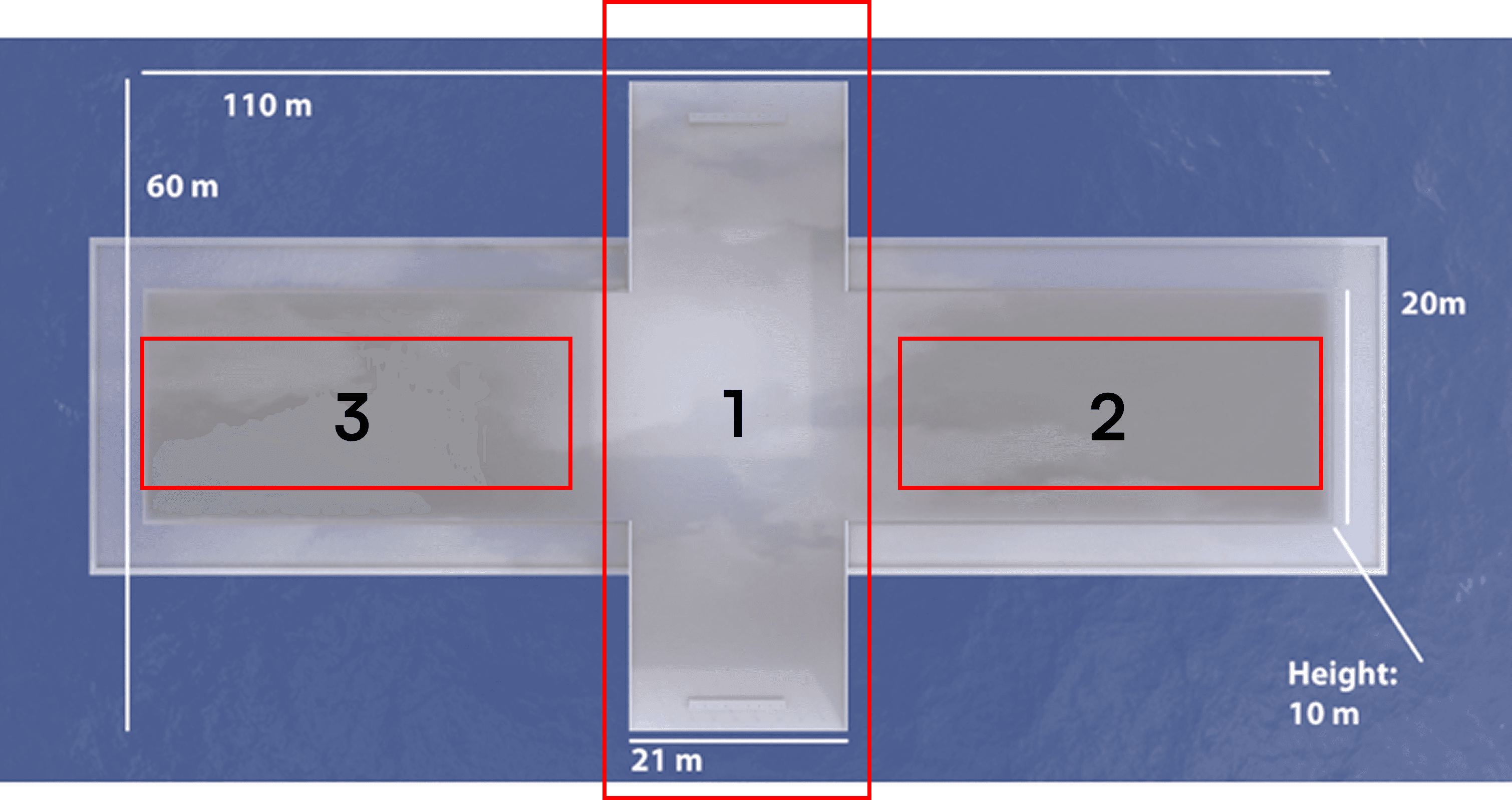
01 First Room
Main exhibition room
An overview of the exhibition experience
History of visual music
Social Space
Guidance through the other rooms
03 Third Room
Film and Rhythm
History of using film as the main medium of music visualization
02 Second Room
Lumia and painting music
history of Lumia (first music visualizer machine)
History of painting music
Background
The future of virtual reality (VR) holds immense promise and potential for transformative experiences across various domains. One of the evolving fields in virtual reality is music. VR will enable artists to create immersive concert experiences that allow fans to virtually attend live performances from anywhere in the world. These virtual concerts can feature interactive elements, personalized views, and spatial audio, providing a sense of presence and connection for audiences. But what happens to hearing-impaired people when entering rooms with sound as their main feature?
As VR concerts and music-driven spaces expand, most experiences still rely primarily on sound.
This sound-first design can limit access and participation for deaf and hard-of-hearing audiences.
The result is an accessibility gap and a clear opportunity to use visual music to translate sound into meaningful visual experiences.
Problem overview
Purpose
The proposed solution is to translate sound into meaningful visual systems, so music-driven VR spaces can remain immersive and accessible for deaf and hard-of-hearing audiences.
What is vibra vision?
Vibra Vision is an immersive metaverse exhibition that traces the evolution of visual music while showcasing interactive installations that convert sound into visuals. It invites audiences to listen with their eyes and offers VR creators a model for integrating visual accessibility as a core layer of musical experience.
Why an Exhibition?
An exhibition format makes this approach understandable through direct experience. It allows visitors to explore multiple visual translation methods, compare historical approaches, and interact with sound-to-visual relationships in a way that is educational, intuitive, and inclusive.
Content Search
Visual music refers to systems that convert music or sound directly into visual forms, such as film, video, computer graphics, installations, or performances by means of a mechanical instrument, an artist's interpretation, or a computer.
The practice dates back to the 17th century and has evolved across several major approaches, including:
Light and Music
Film and Rhythm
Painting Music
These three areas reflect different ways artists have experimented with integrating music into visual media.
01
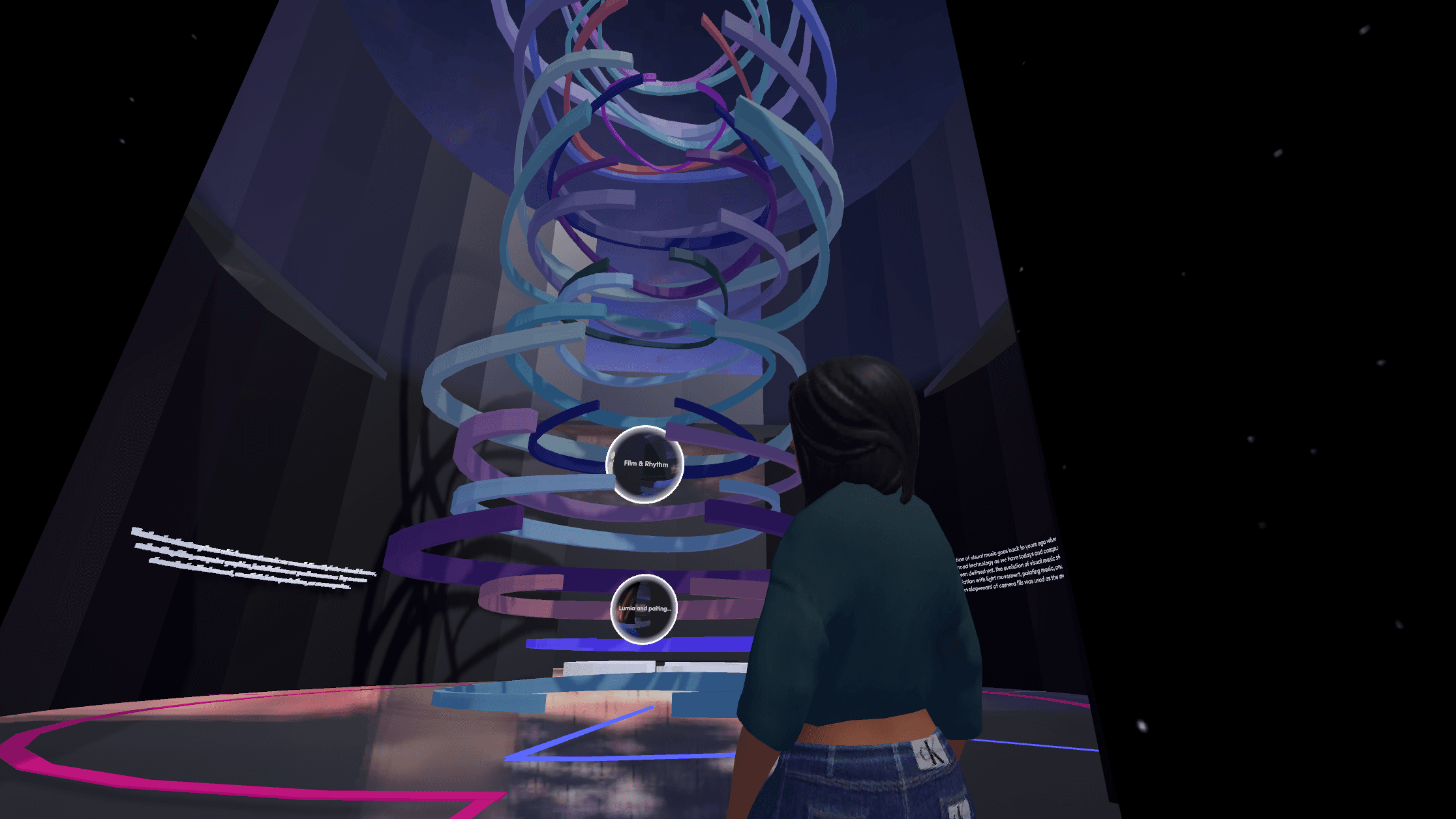
First Room
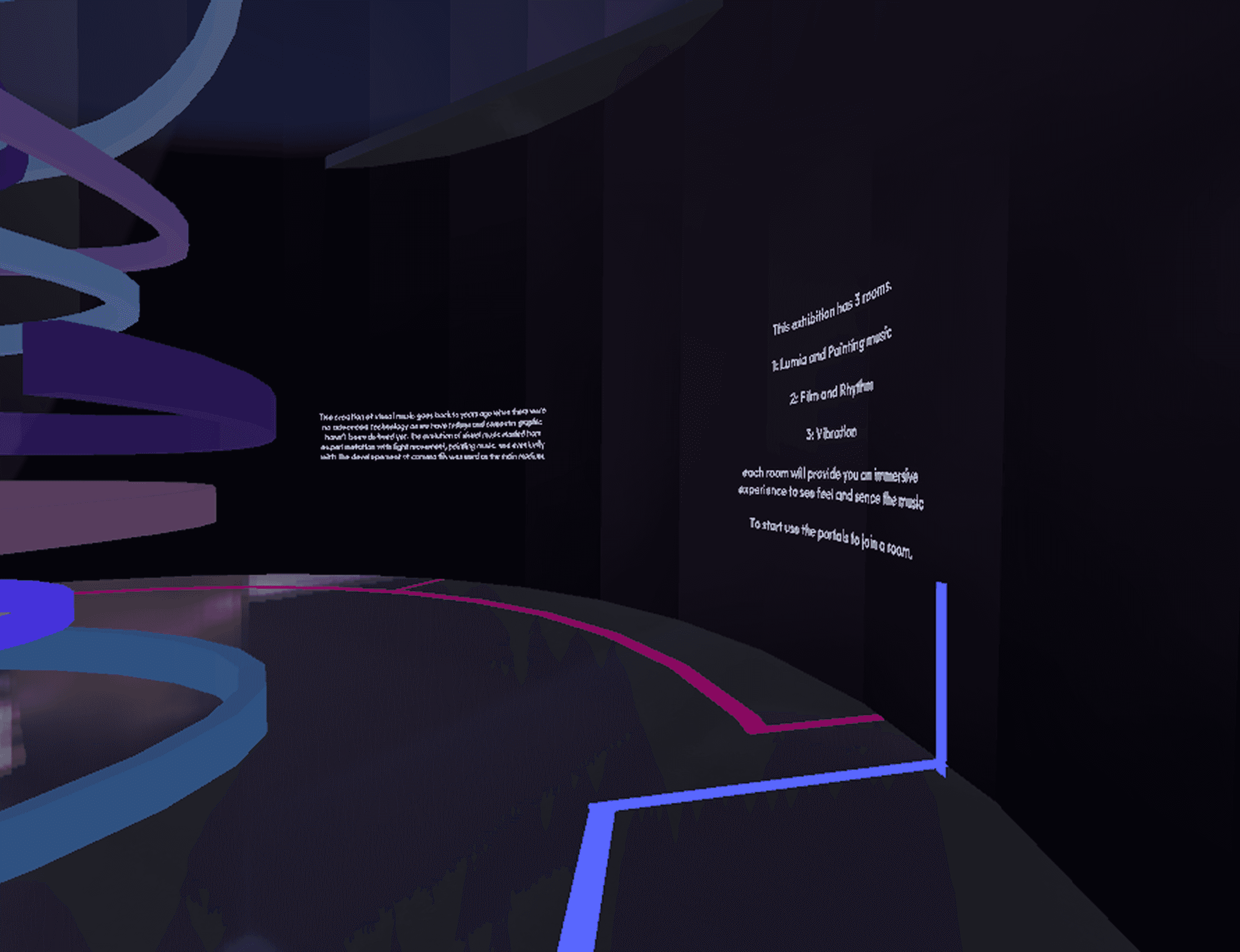
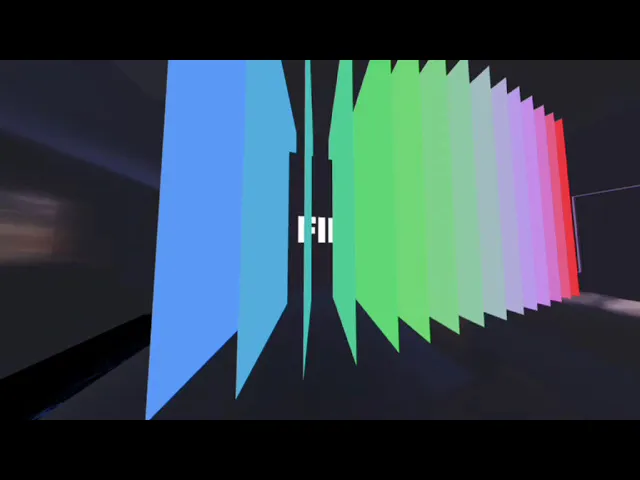
This room is designed to familiarize the visitor with the concept of the exhibition visually and through text.
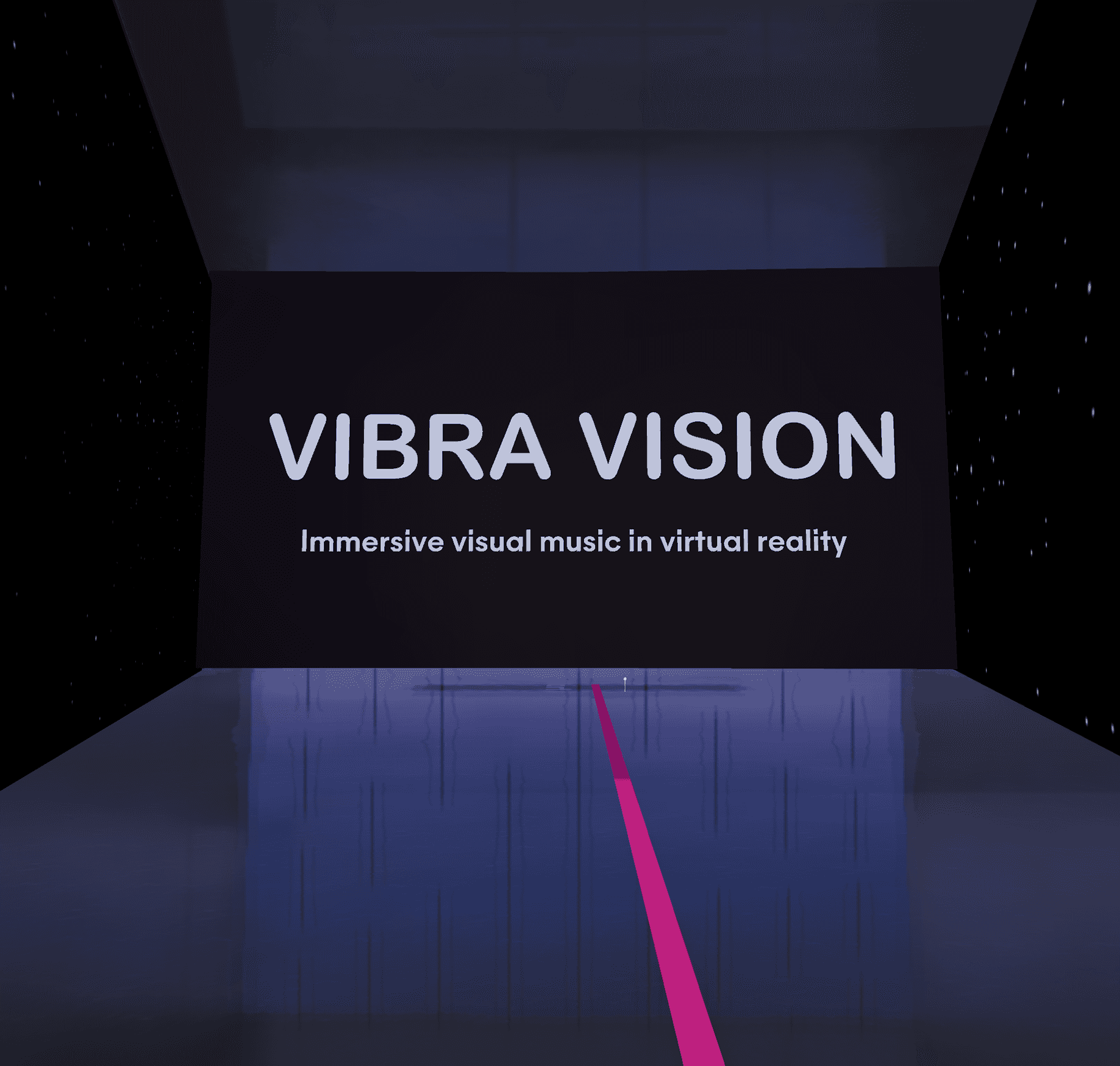
As you step into the space, you'll see the name of the exhibition right away. On the walls beside you, there are videos playing along with the music, all pointing towards the main area of the room.
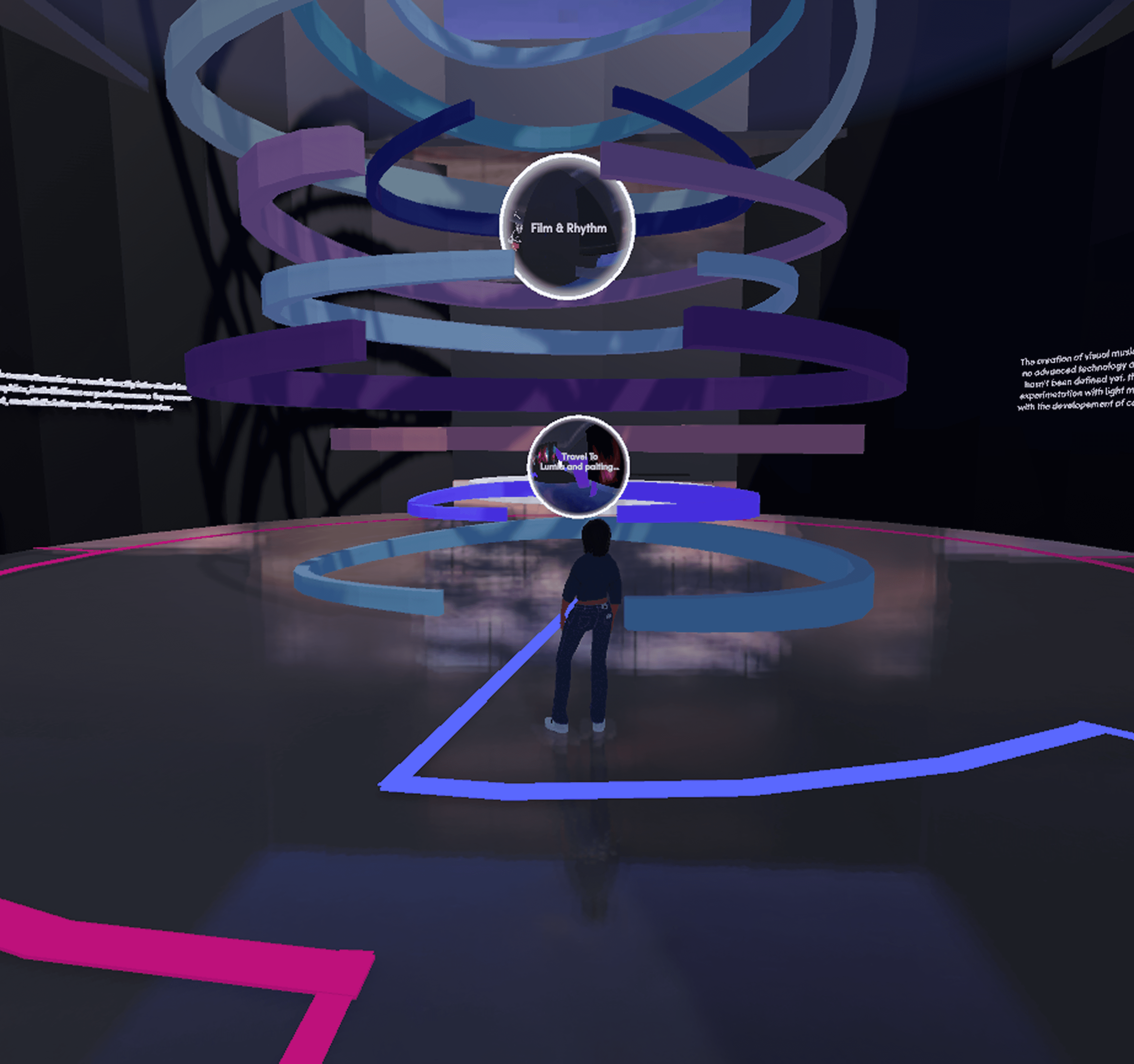
To visually represent music, there's a large circular 3D model inspired by the waves found in musical sound.
To ensure visitors can navigate the virtual exhibition independently, a guiding line is implemented on the ground.
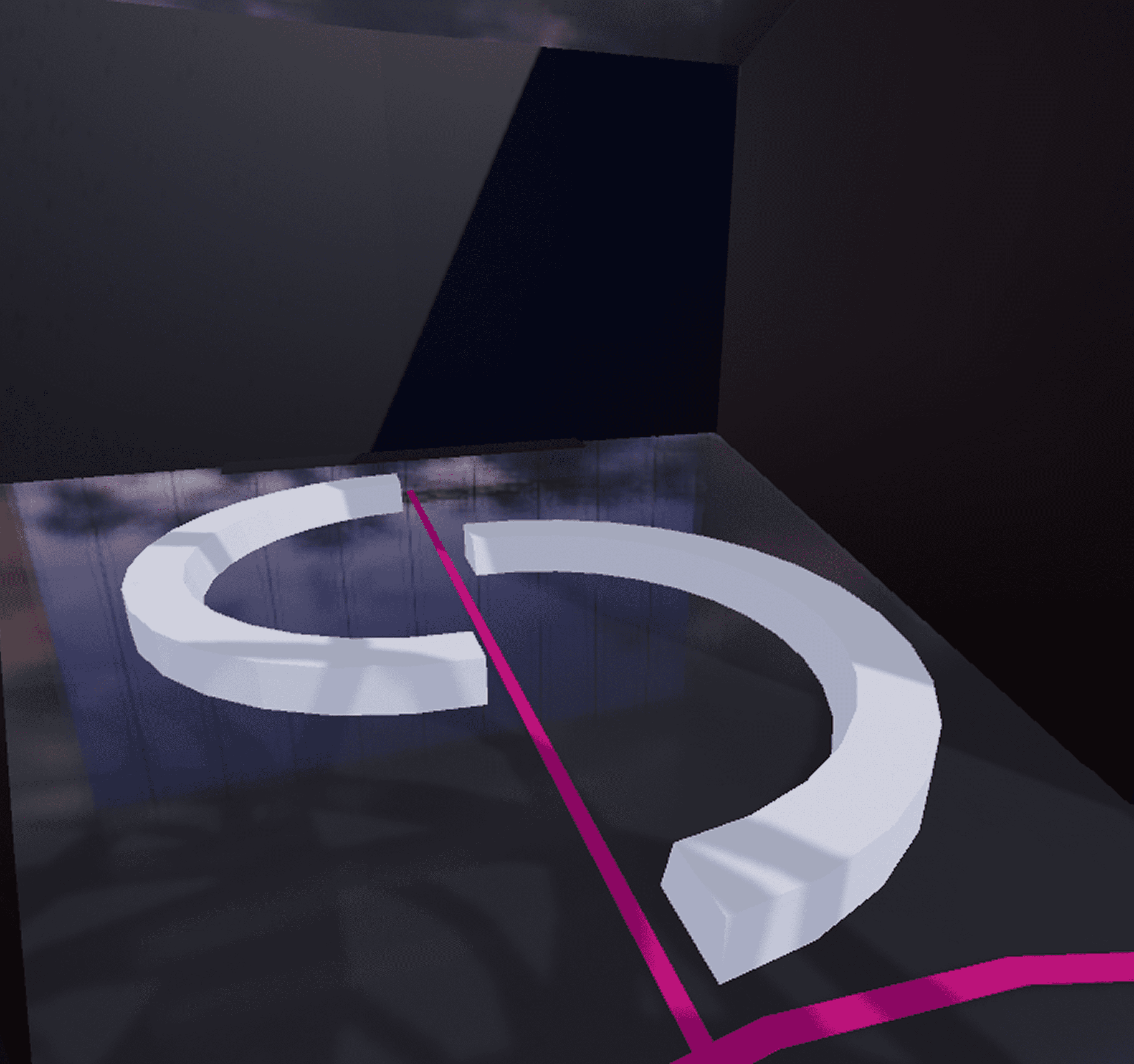
Designated seating is available for visitors to gather either before or after exploring the exhibition to share their experience.
02
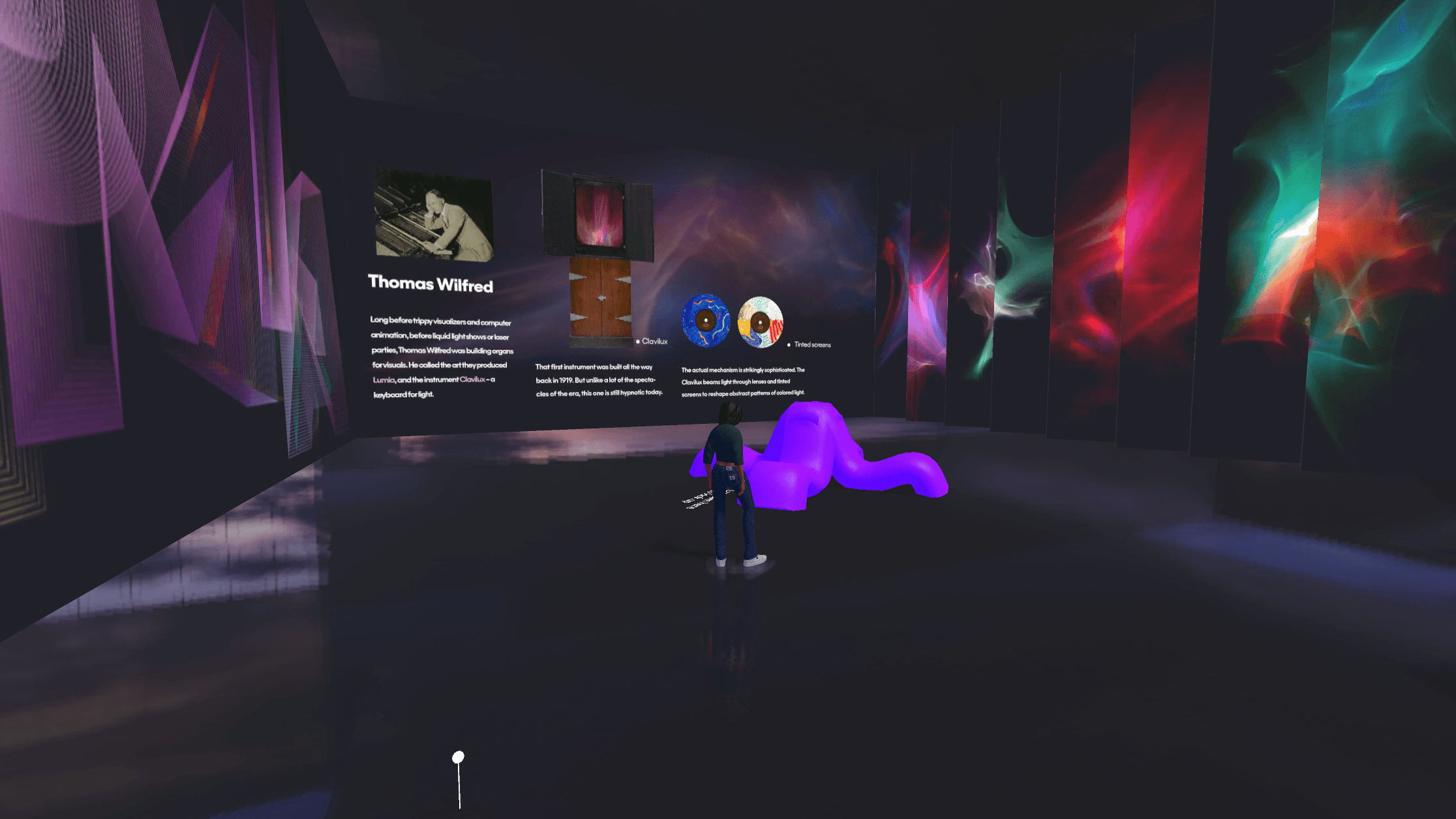
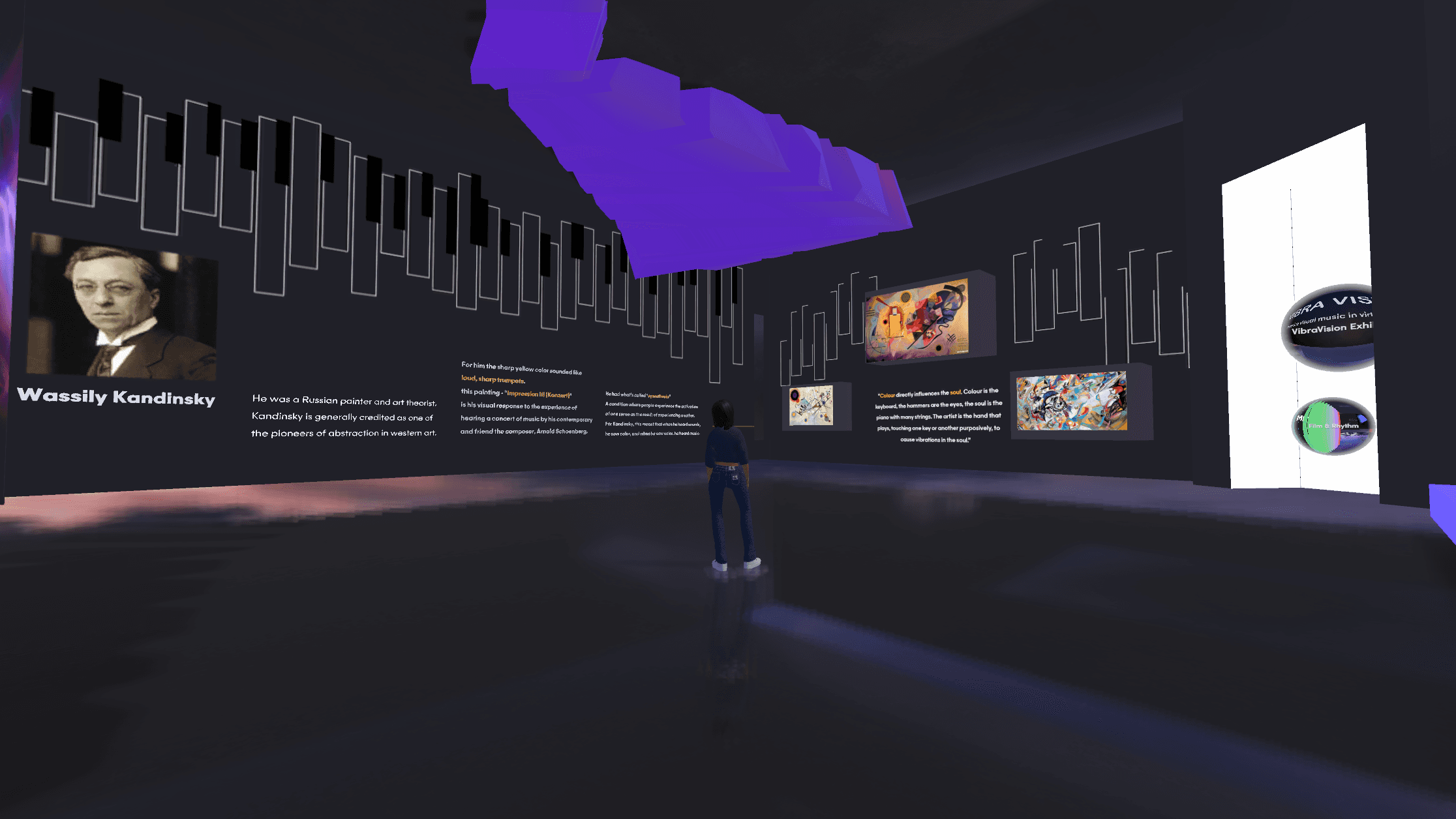
Second Room
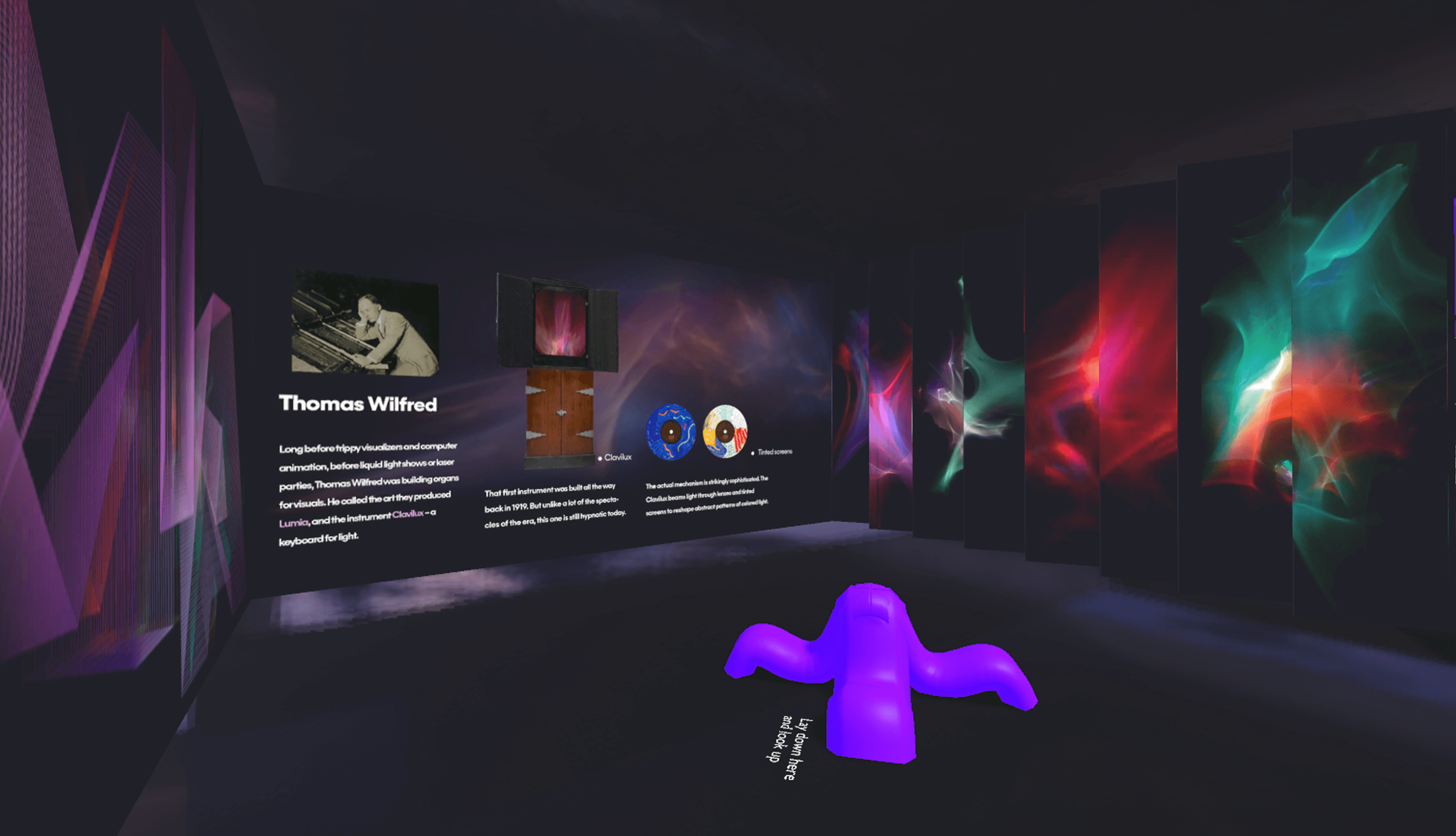
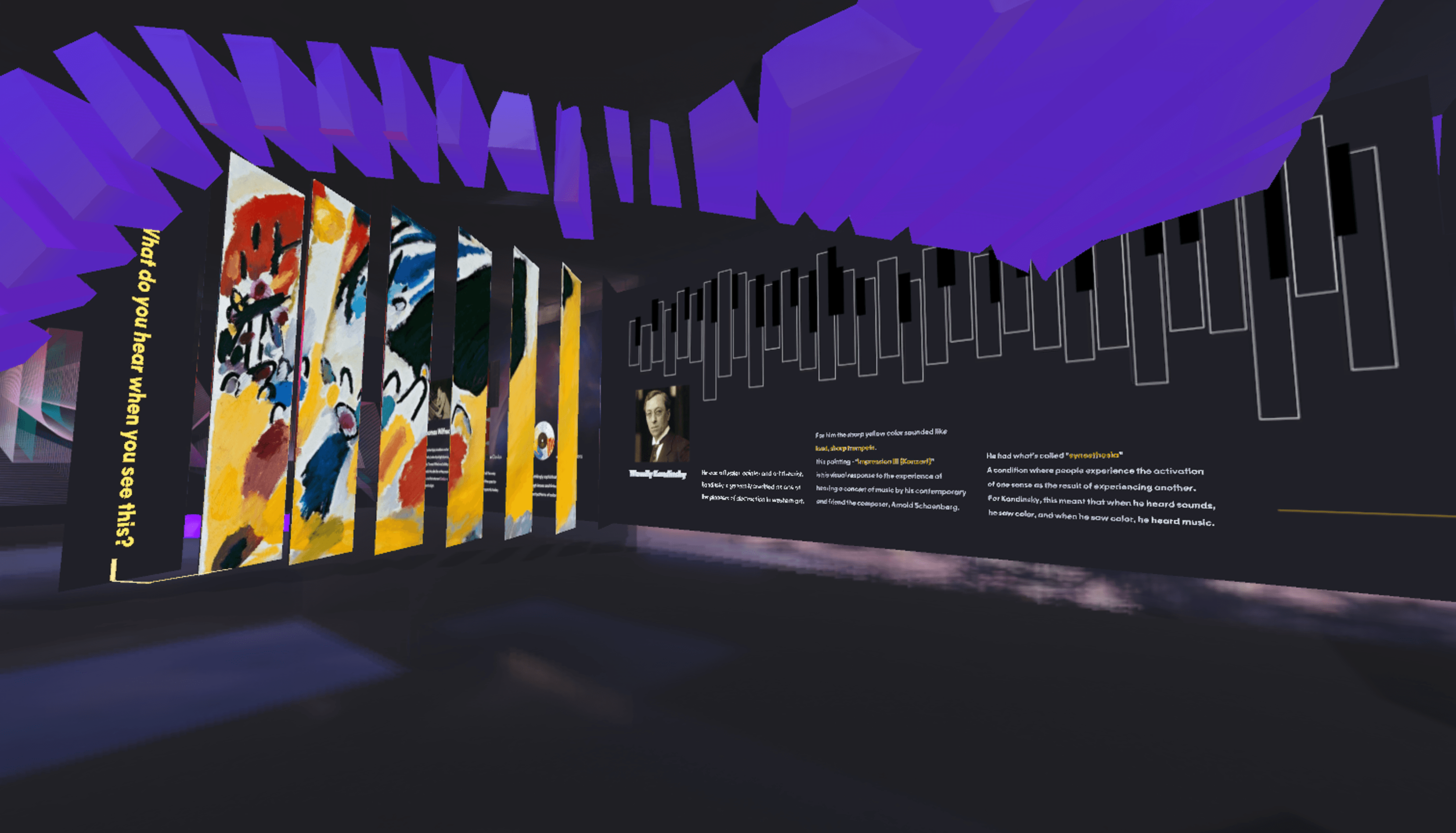
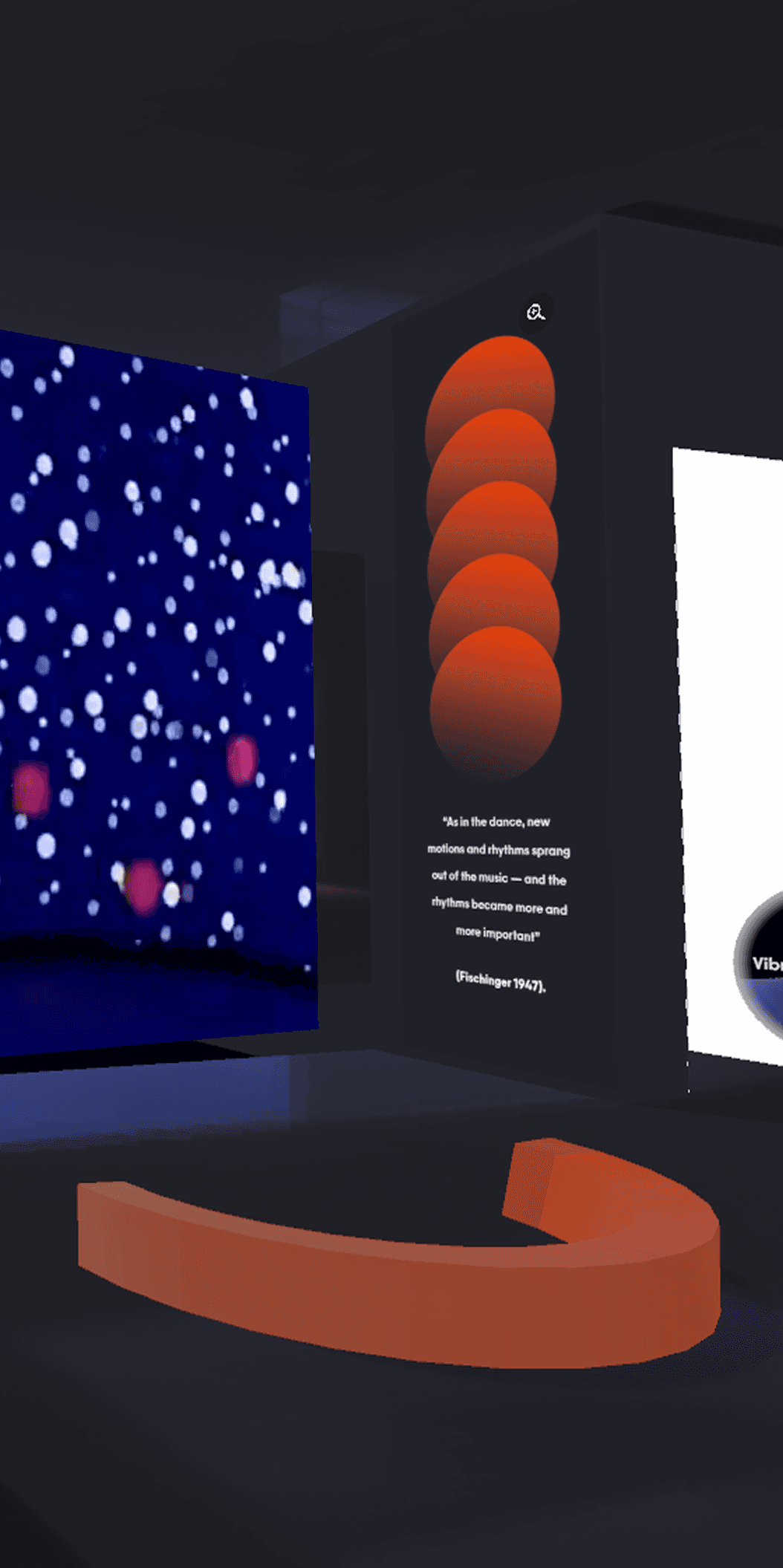
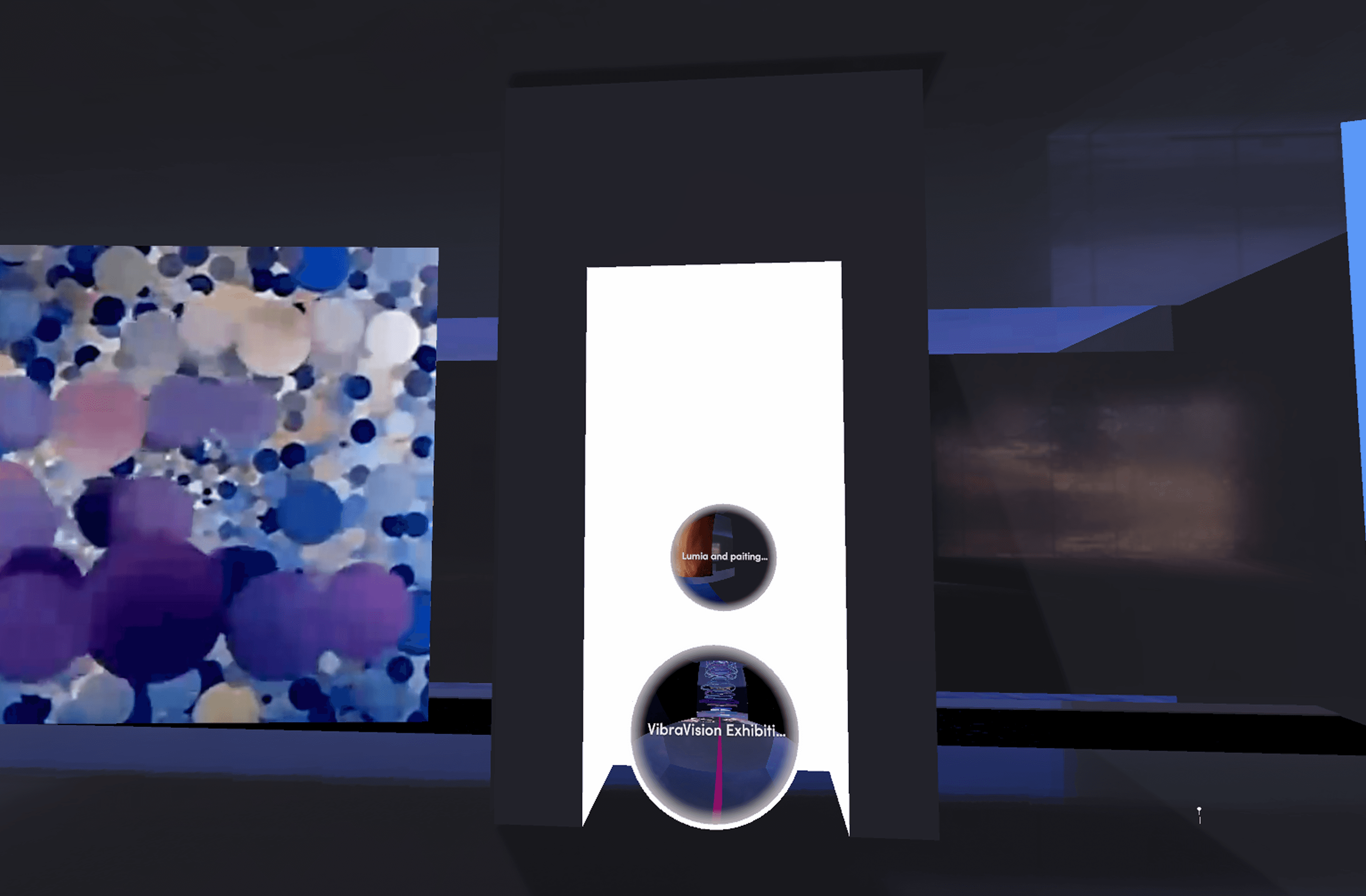
The second room is divided into 2 separate spaces. The first one is “Lumia” and the second one is “Music Painting.”
1: Lumia was invented by Thomas Wilfred
2: Painting Music made by Wassily Kandinsky
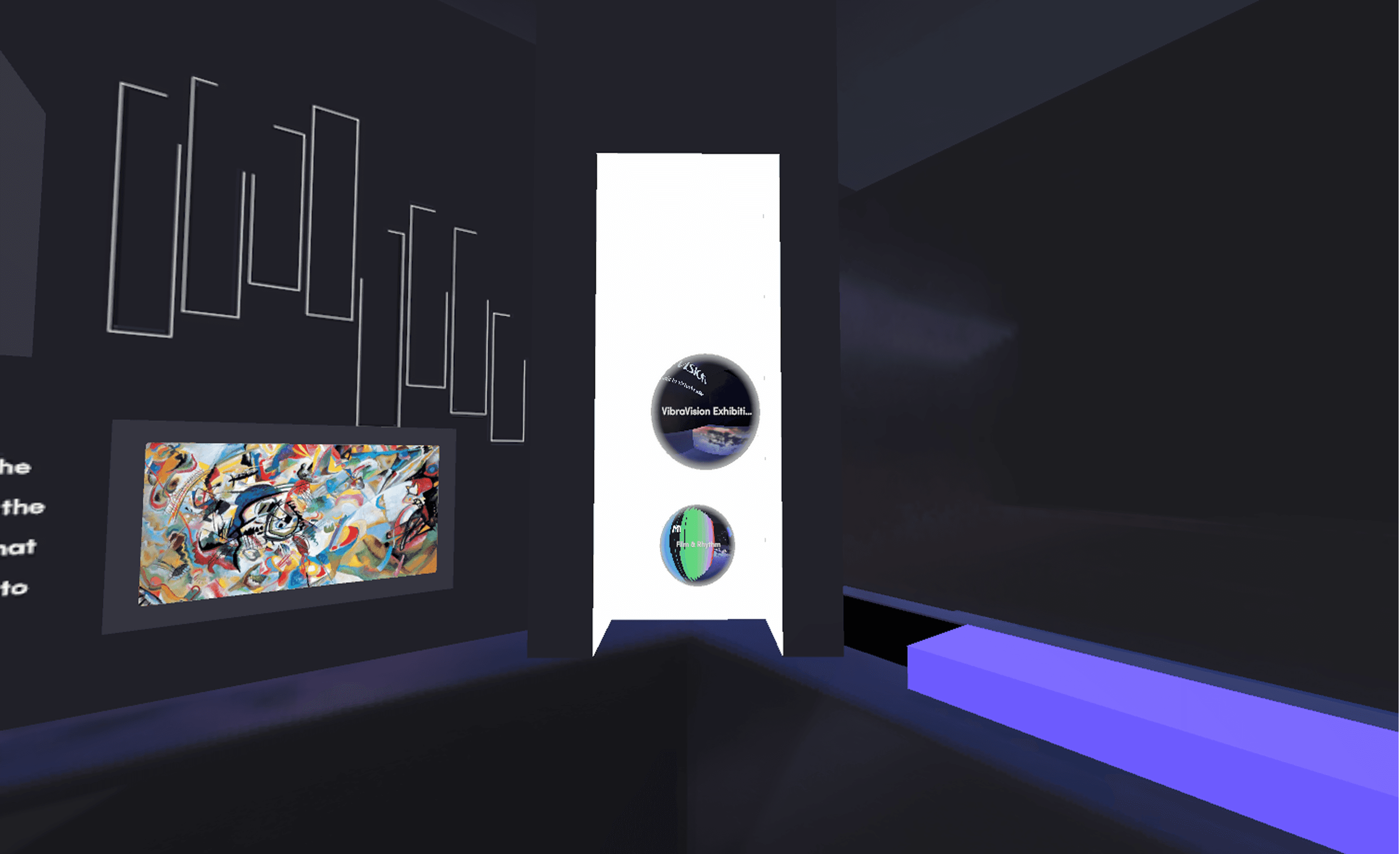
3: Portals
You can read the history, watch, and experience visualized music created with the Lumia machine and check out Painted music.
03
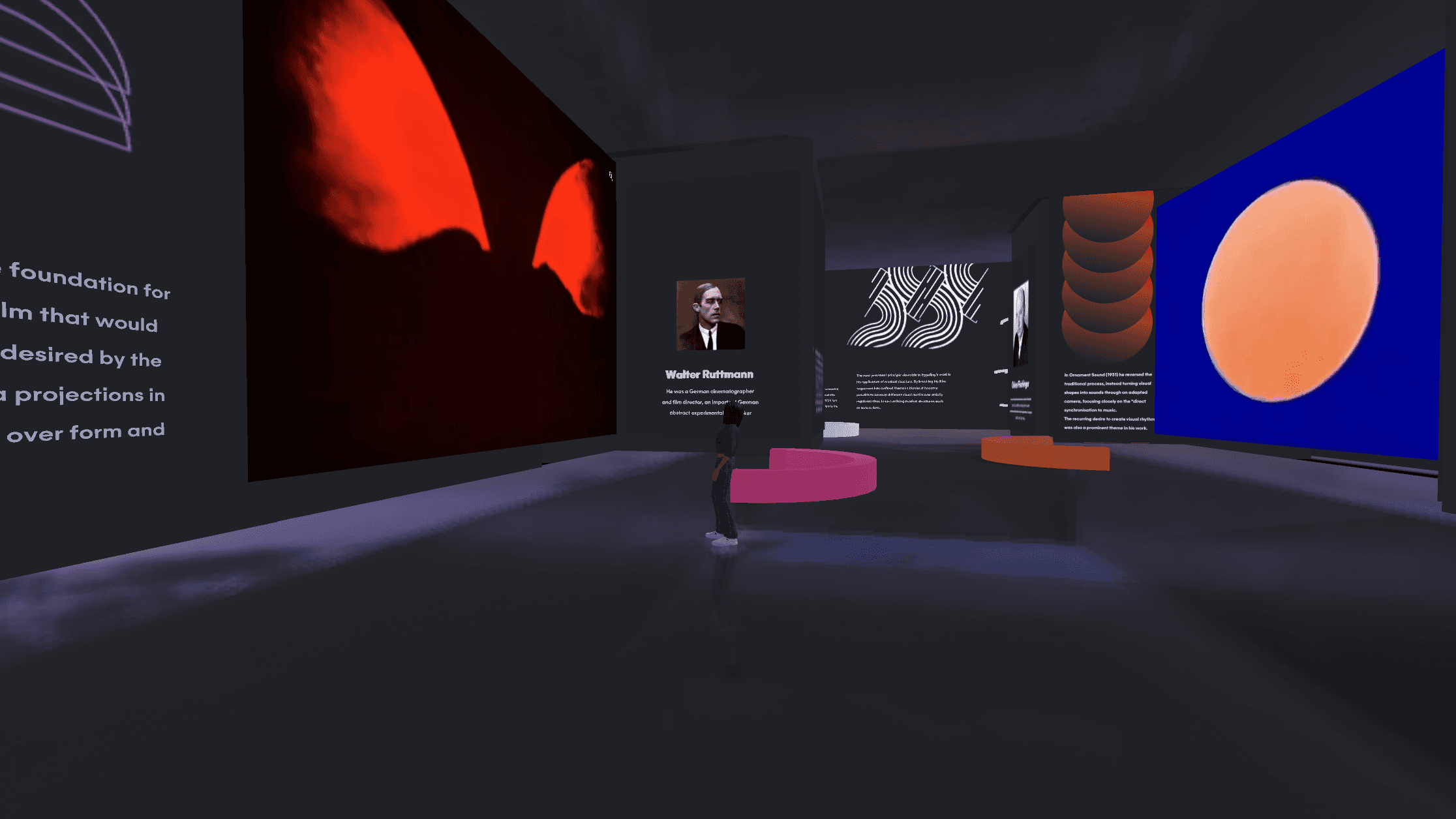
Third Room
The third room has 4 different spaces.
Music visualization by Walter Ruttmann
Music visualization by Viking Eggeling
Music visualization by Oskar Fischinger
Portals
All of these artists utilized film as their medium for visualizing music, yet each of them showcased distinct styles in their designs and how they interpreted the rhythm of the music.

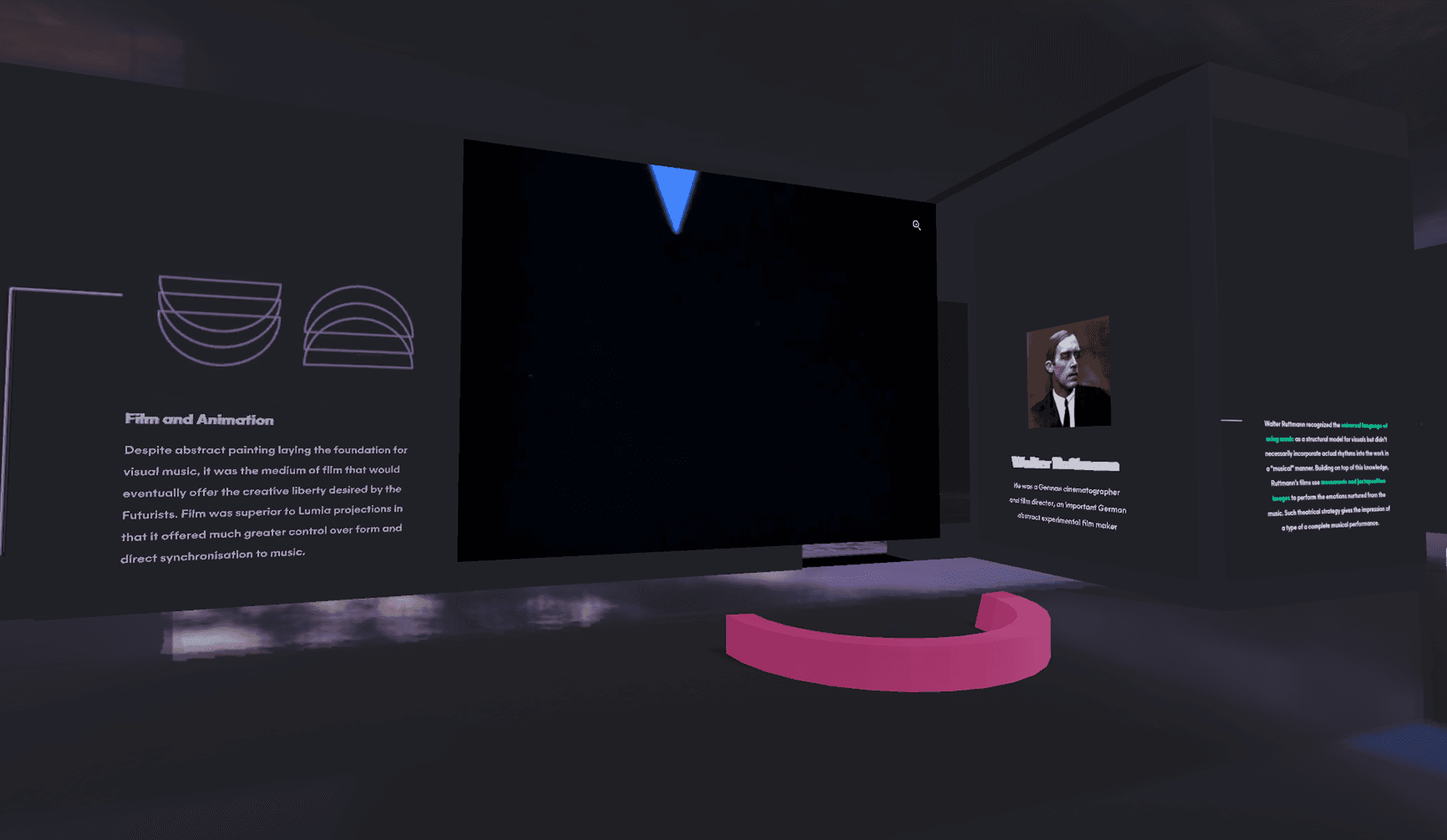
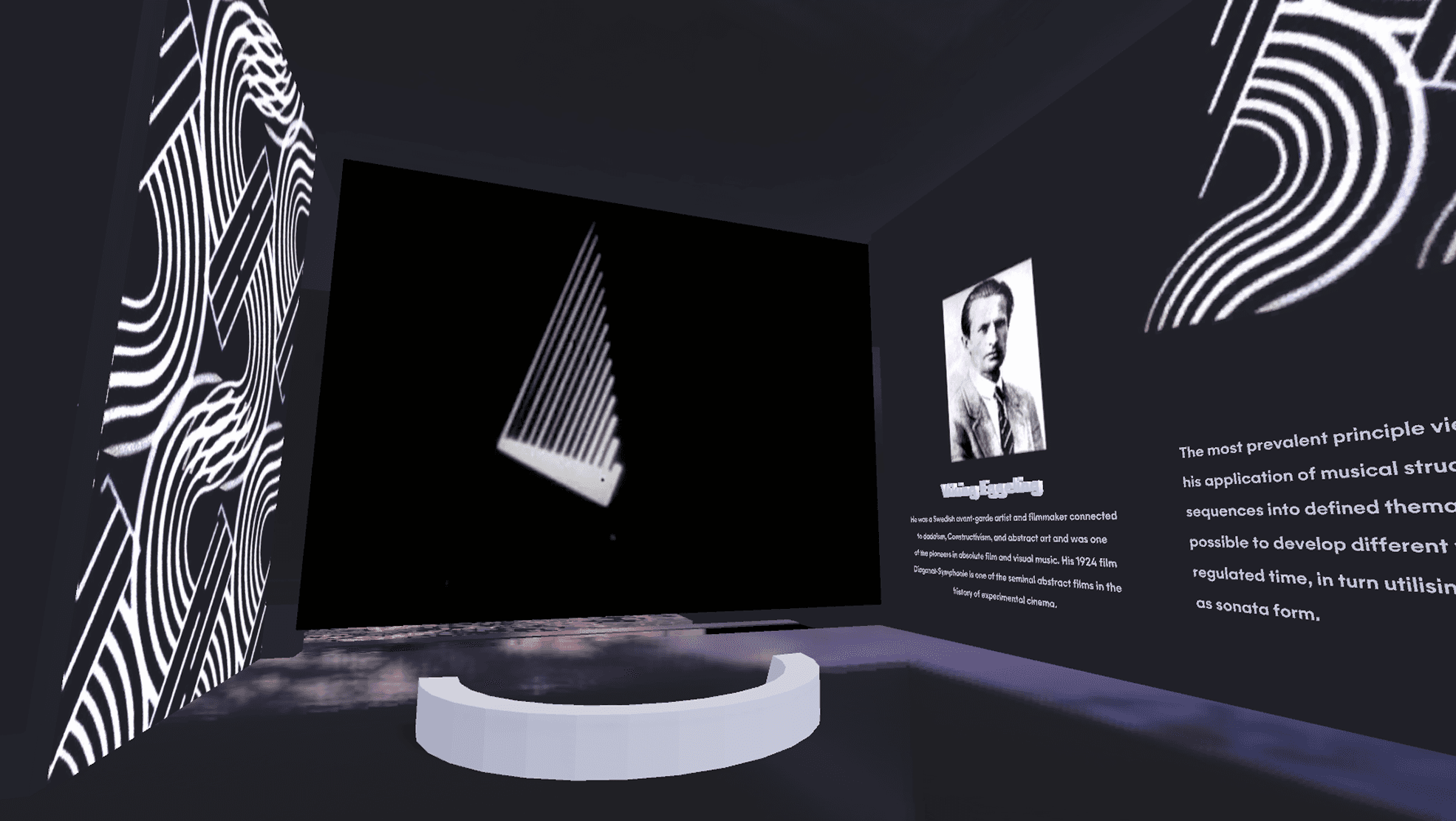
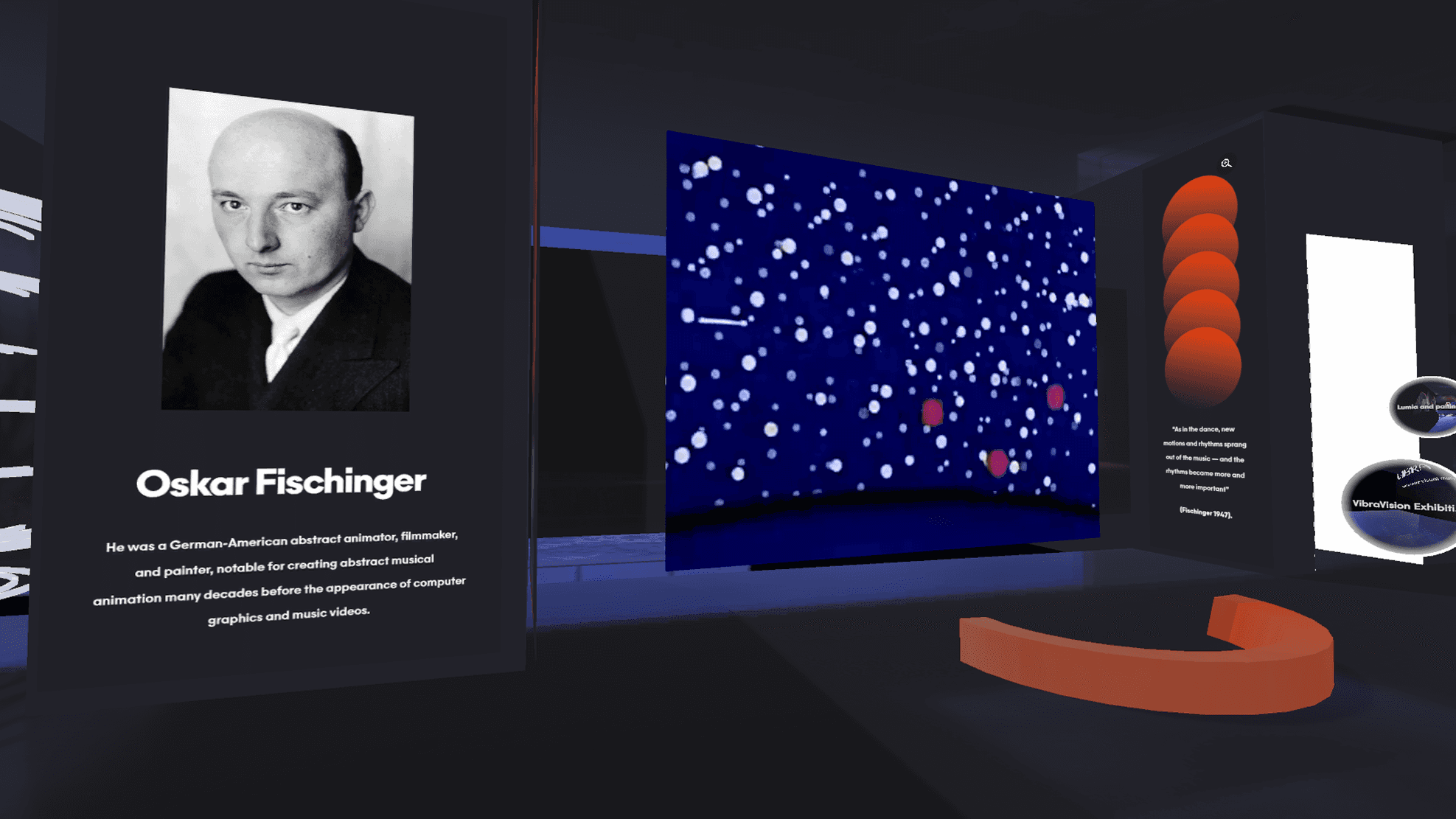
Visitors have the opportunity to relax on the pink bench while enjoying the film. This unique seating option is equipped with vibrating effects synchronized with the rhythm of the music. As visitors watch the film, they'll also experience haptic feedback through the VR handles.
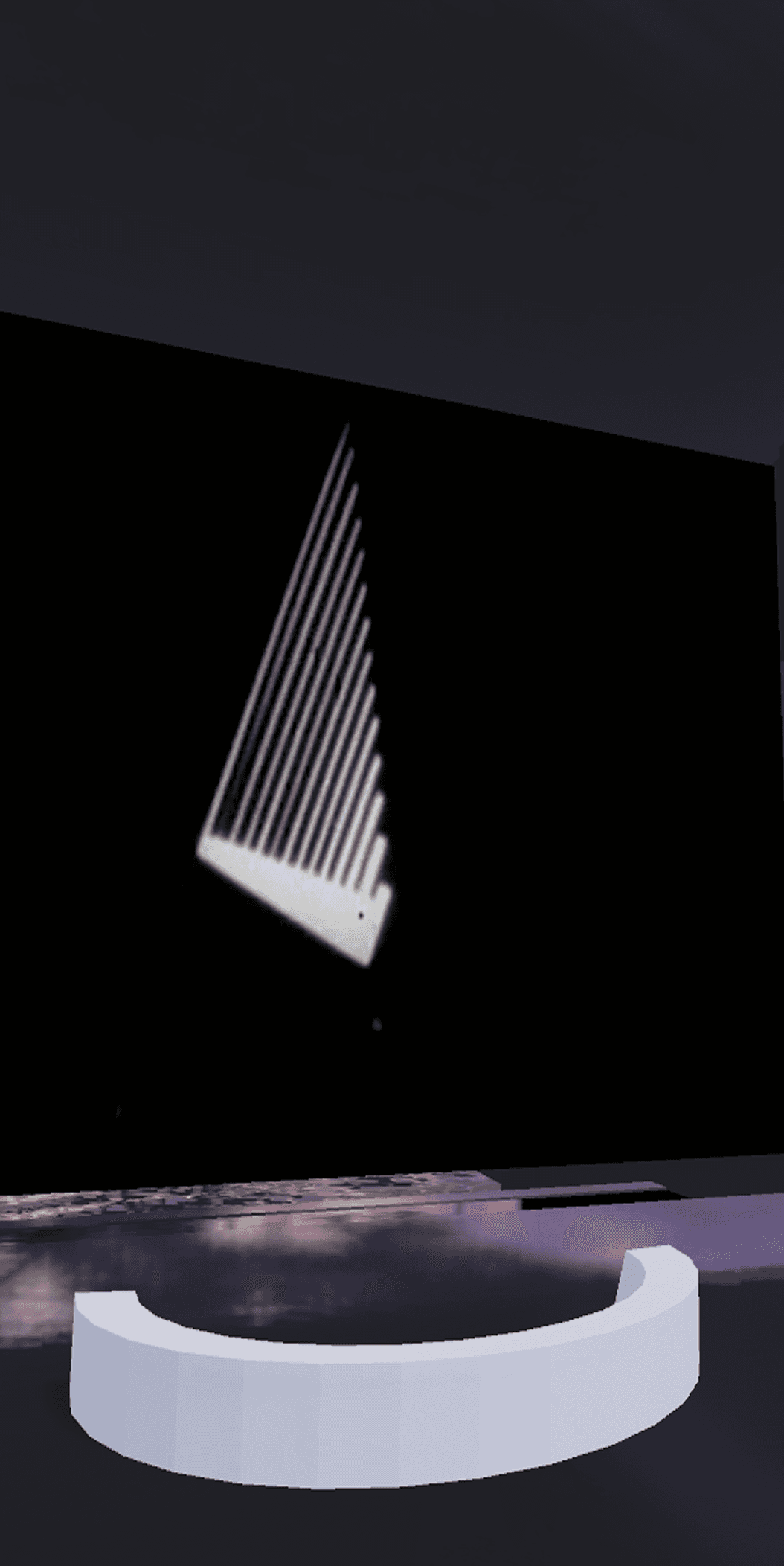
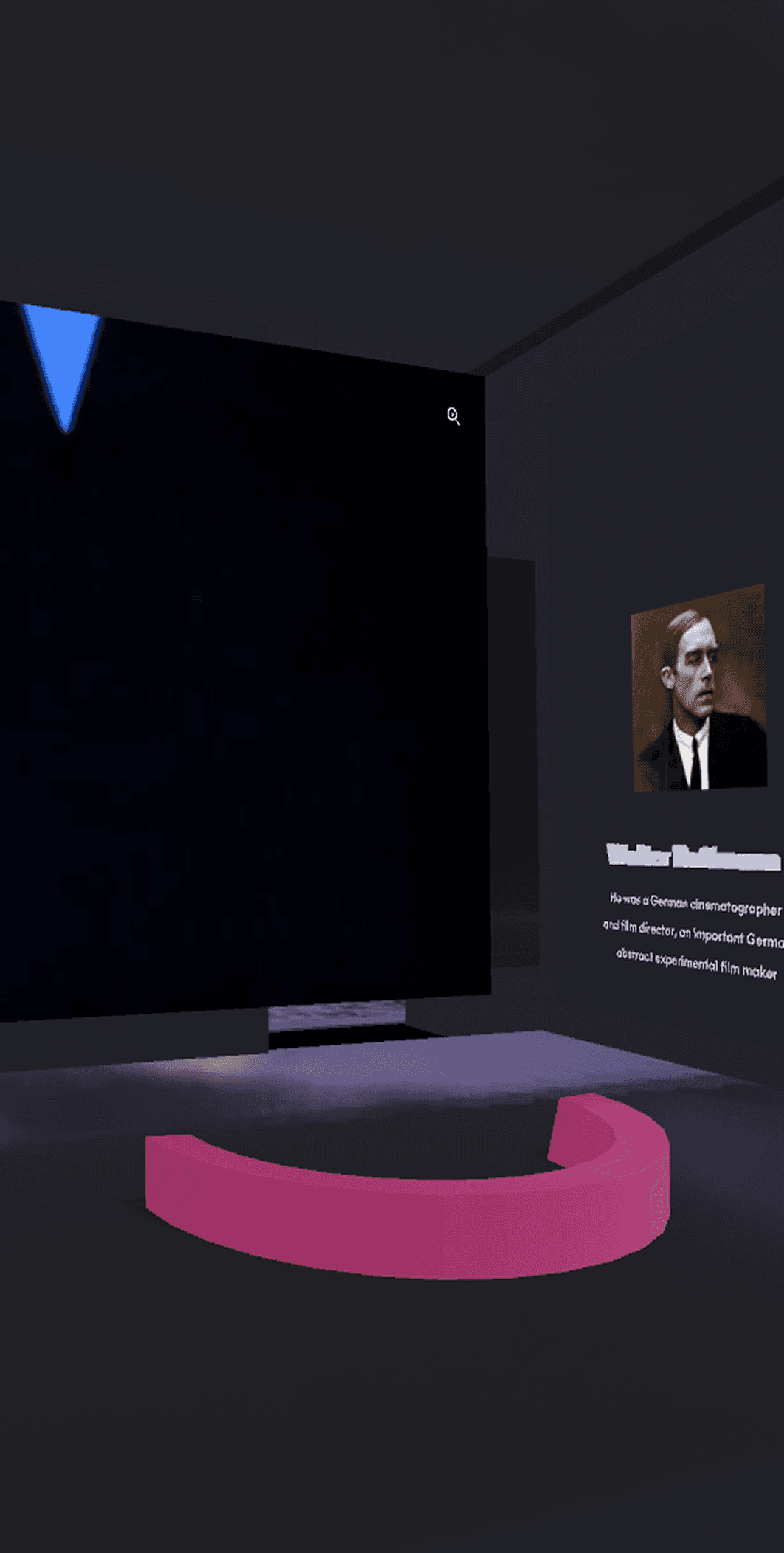
Content Search
Visual music refers to systems that convert music or sound directly into visual forms, such as film, video, computer graphics, installations, or performances by means of a mechanical instrument, an artist's interpretation, or a computer.
The practice dates back to the 17th century and has evolved across several major approaches, including:
Light and Music
Film and Rhythm
Painting Music
These three areas reflect different ways artists have experimented with integrating music into visual media.
Floor Plan
The gallery space will be divided into 3 spaces.
01 First Room
Main exhibition room
An overview of the exhibition experience
History of visual music
Social Space
Guidance through the other rooms
03 Third Room
Film and Rhythm
History of using film as the main medium of music visualization
02 Second Room
Lumia and painting music
history of Lumia (first music visualizer machine)
History of painting music
01
01
First Room
First Room
This room is designed to familiarize the visitor with the concept of the exhibition visually and through text.
As you step into the space, you'll see the name of the exhibition right away. On the walls beside you, there are videos playing along with the music, all pointing towards the main area of the room.
To visually represent music, there's a large circular 3D model inspired by the waves found in musical sound.
To ensure visitors can navigate the virtual exhibition independently, a guiding line is implemented on the ground.
Designated seating is available for visitors to gather either before or after exploring the exhibition to share their experience.
01
Findings from Secondary research
Western families often have a negotiation-based structure, giving children more independence and autonomy.
Grocery shopping is used as a learning opportunity, teaching children to select produce using senses and to develop analytical skills like price and health assessment.
Shopping trips serve as chances for younger children to expand their vocabulary and knowledge.
Parents tend to spend more when shopping with their children.
Children use their "purchase-power" directly or indirectly in shopping decisions.
Children, particularly aged 4-11, significantly influence family shopping decisions.
Technological interventions may not suit very young children due to different cognitive and emotional development stages.
Interventions should be straightforward and based on tangible concepts.
01
Findings from Secondary research
Western families often have a negotiation-based structure, giving children more independence and autonomy.
Grocery shopping is used as a learning opportunity, teaching children to select produce using senses and to develop analytical skills like price and health assessment.
Shopping trips serve as chances for younger children to expand their vocabulary and knowledge.
Parents tend to spend more when shopping with their children.
Children use their "purchase-power" directly or indirectly in shopping decisions.
Children, particularly aged 4-11, significantly influence family shopping decisions.
Technological interventions may not suit very young children due to different cognitive and emotional development stages.
Interventions should be straightforward and based on tangible concepts.
02
02
Second Room
Second Room
The second room is divided into 2 separate spaces. The first one is “Lumia” and the second one is “Music Painting.”
1: Lumia was invented by Thomas Wilfred
2: Painting Music made by Wassily Kandinsky
3: Portals
You can read the history, watch, and experience visualized music created with the Lumia machine and check out Painted music.
01
Findings from Secondary research
Western families often have a negotiation-based structure, giving children more independence and autonomy.
Grocery shopping is used as a learning opportunity, teaching children to select produce using senses and to develop analytical skills like price and health assessment.
Shopping trips serve as chances for younger children to expand their vocabulary and knowledge.
Parents tend to spend more when shopping with their children.
Children use their "purchase-power" directly or indirectly in shopping decisions.
Children, particularly aged 4-11, significantly influence family shopping decisions.
Technological interventions may not suit very young children due to different cognitive and emotional development stages.
Interventions should be straightforward and based on tangible concepts.
01
Findings from Secondary research
Western families often have a negotiation-based structure, giving children more independence and autonomy.
Grocery shopping is used as a learning opportunity, teaching children to select produce using senses and to develop analytical skills like price and health assessment.
Shopping trips serve as chances for younger children to expand their vocabulary and knowledge.
Parents tend to spend more when shopping with their children.
Children use their "purchase-power" directly or indirectly in shopping decisions.
Children, particularly aged 4-11, significantly influence family shopping decisions.
Technological interventions may not suit very young children due to different cognitive and emotional development stages.
Interventions should be straightforward and based on tangible concepts.
03
03
Third Room
Third Room
The third room has 4 different spaces.
Music visualization by Walter Ruttmann
Music visualization by Viking Eggeling
Music visualization by Oskar Fischinger
Portals
All of these artists utilized film as their medium for visualizing music, yet each of them showcased distinct styles in their designs and how they interpreted the rhythm of the music.
Visitors have the opportunity to relax on the pink bench while enjoying the film. This unique seating option is equipped with vibrating effects synchronized with the rhythm of the music. As visitors watch the film, they'll also experience haptic feedback through the VR handles.
01
Findings from Secondary research
Western families often have a negotiation-based structure, giving children more independence and autonomy.
Grocery shopping is used as a learning opportunity, teaching children to select produce using senses and to develop analytical skills like price and health assessment.
Shopping trips serve as chances for younger children to expand their vocabulary and knowledge.
Parents tend to spend more when shopping with their children.
Children use their "purchase-power" directly or indirectly in shopping decisions.
Children, particularly aged 4-11, significantly influence family shopping decisions.
Technological interventions may not suit very young children due to different cognitive and emotional development stages.
Interventions should be straightforward and based on tangible concepts.
01
Findings from Secondary research
Western families often have a negotiation-based structure, giving children more independence and autonomy.
Grocery shopping is used as a learning opportunity, teaching children to select produce using senses and to develop analytical skills like price and health assessment.
Shopping trips serve as chances for younger children to expand their vocabulary and knowledge.
Parents tend to spend more when shopping with their children.
Children use their "purchase-power" directly or indirectly in shopping decisions.
Children, particularly aged 4-11, significantly influence family shopping decisions.
Technological interventions may not suit very young children due to different cognitive and emotional development stages.
Interventions should be straightforward and based on tangible concepts.
Walk through
Link to the Virtual Space
01
Findings from Secondary research
Western families often have a negotiation-based structure, giving children more independence and autonomy.
Grocery shopping is used as a learning opportunity, teaching children to select produce using senses and to develop analytical skills like price and health assessment.
Shopping trips serve as chances for younger children to expand their vocabulary and knowledge.
Parents tend to spend more when shopping with their children.
Children use their "purchase-power" directly or indirectly in shopping decisions.
Children, particularly aged 4-11, significantly influence family shopping decisions.
Technological interventions may not suit very young children due to different cognitive and emotional development stages.
Interventions should be straightforward and based on tangible concepts.
01
Findings from Secondary research
Western families often have a negotiation-based structure, giving children more independence and autonomy.
Grocery shopping is used as a learning opportunity, teaching children to select produce using senses and to develop analytical skills like price and health assessment.
Shopping trips serve as chances for younger children to expand their vocabulary and knowledge.
Parents tend to spend more when shopping with their children.
Children use their "purchase-power" directly or indirectly in shopping decisions.
Children, particularly aged 4-11, significantly influence family shopping decisions.
Technological interventions may not suit very young children due to different cognitive and emotional development stages.
Interventions should be straightforward and based on tangible concepts.
Link to the Virtual Space
What I learned
I learned that while some concepts might seem impossible with current AR technology, I believe they will become feasible in the future. This advancement will create a space for people worldwide to communicate and experience unimaginable things. I'm particularly excited about the potential for disabled individuals to access experiences previously out of reach, making VR more inclusive and popular.
On the technical side, I was able to improve my 3D modeling skills and environment design in VR, which will serve as the foundation for future immersive projects.
What I learned
I learned that while some concepts might seem impossible with current AR technology, I believe they will become feasible in the future. This advancement will create a space for people worldwide to communicate and experience unimaginable things. I'm particularly excited about the potential for disabled individuals to access experiences previously out of reach, making VR more inclusive and popular.
On the technical side, I was able to improve my 3D modeling skills and environment design in VR, which will serve as the foundation for future immersive projects.



Golnaz Safari - Visual Communication Designer
– Let's Explore How My Work Can Add Value to Your Team!
Golnaz Safari - Visual Communication Designer
– Let's Explore How My Work Can Add Value to Your Team!
Golnaz Safari - Visual Communication Designer
– Let's Explore How My Work Can Add Value to Your Team!